How to Check if Honey Is Pure at Home
Adulterated honey is common, so it is worth knowing how to check what you buy. Home tests can give you useful hints, but none of them is proof. Here is what each one tells you, honestly.
1. The water test
Drop a spoon of honey into a glass of room-temperature water. Pure honey tends to sink and settle as a lump. Honey thinned with syrup or water usually starts dissolving straight away.
2. The thumb test
Put a drop on your thumb. Thick, pure honey stays in place and holds its shape. Runny honey that spreads quickly may have added water.
3. The crystallisation check
Most raw honey crystallises over weeks or months, especially in cooler weather. That is natural and a good sign it has not been heavily heated or filtered. Honey that stays perfectly clear for years may have been processed.
4. Taste and smell
Raw honey has a floral smell and a flavour that changes with the flowers the bees visited. Honey that tastes only of plain sweetness is a warning sign.
What home tests cannot tell you
Skilled adulterators use syrups that pass these tests. The only definitive check is a laboratory analysis of the sugar profile and HMF levels. The practical answer is to buy from a source you can trace back to the beekeeper.
What to look for when buying
- A clear origin: where and how it was collected
- “Raw” or “unheated” on the label, and crystallisation over time
- A seller who answers questions directly
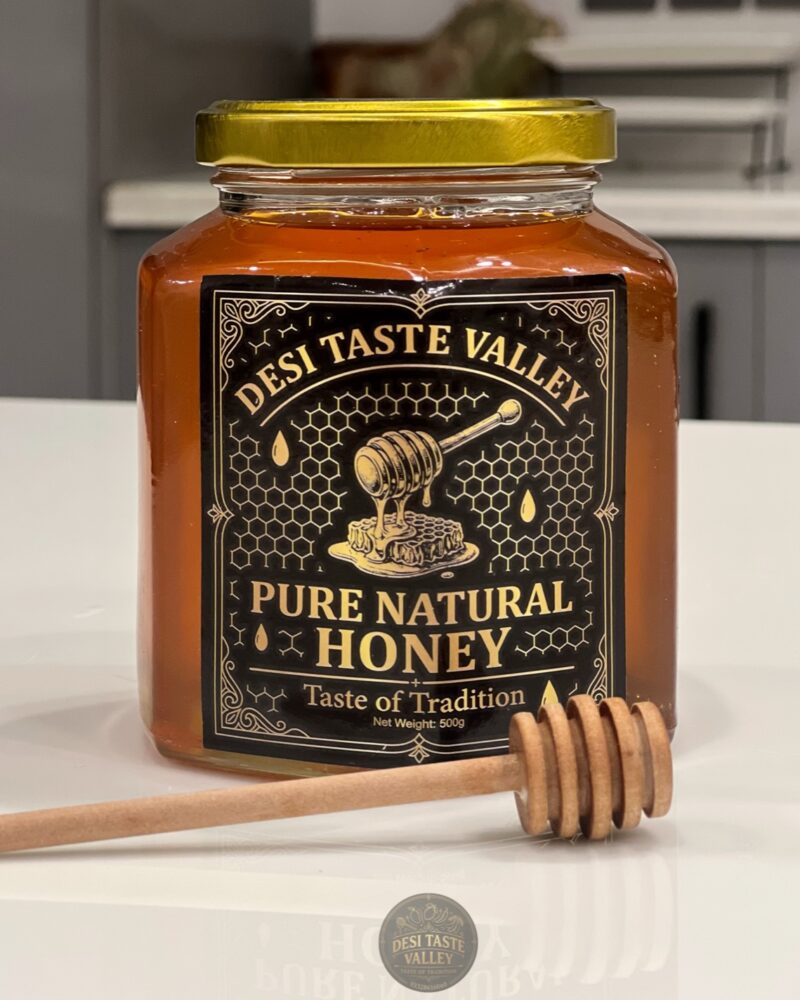
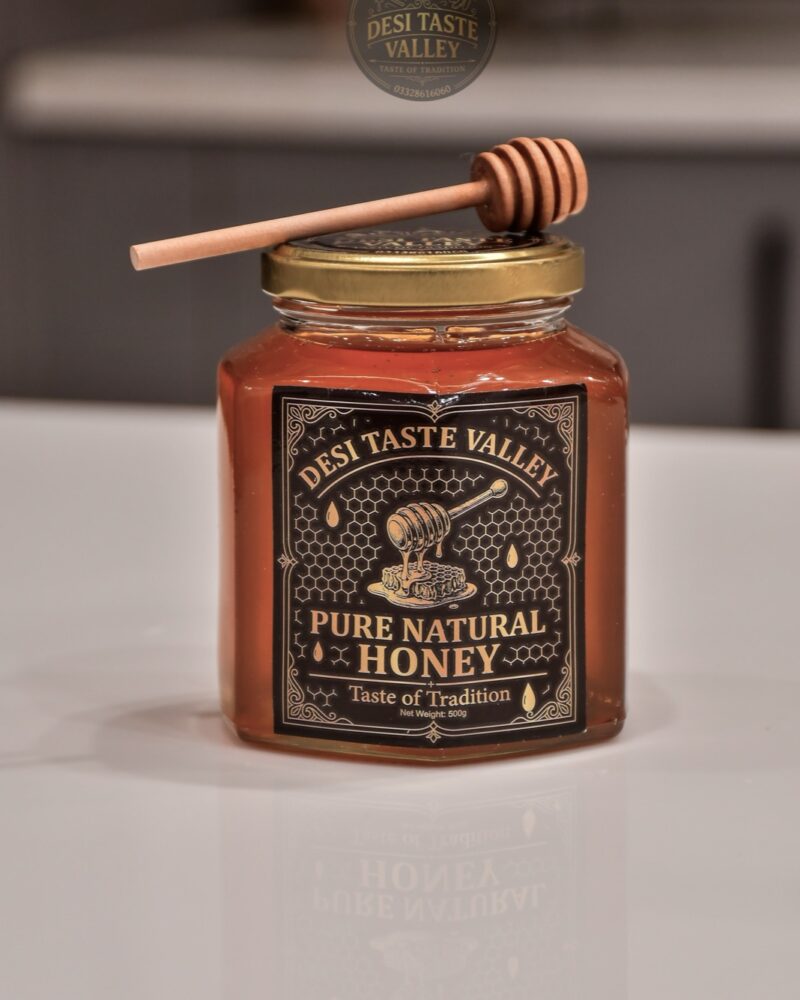
Our Pure Natural Honey is raw, unfiltered and unheated, gathered in small batches from beekeepers in the foothills of Pakistan. It costs PKR 1,150 for 500g and PKR 2,300 for 1kg.
Never give honey to babies under 12 months.